Perform a Self Check
Before submitting a survey, you will need to take a picture of a portion of your existing service line. The information below will outline the steps required to test your service line. If you are unsure of your water service line type, please call the City of Baytown at 281-420-5300 to schedule an inspection by our City personnel.
Service Line
A service line is a pipe that carries water from the city’s supply to your home. The city owns the service line from the main water supply to the meter, while the customer owns the service line from the meter into the home.
What You Will Need
- A key, coin, or flathead screwdriver
- Strong refrigerator magnet (the magnet will work with metal pipes).
How to Self Check your Service Line
Step One - Locate the Water Meter
- Locate the meter box: This is usually in the front or rear of the property line.
- Open the meter box and examine the pipe. Look at the service line going into the meter and leading to the home. Remove the dirt if the service line is covered.
Step Two - Determine Service Line material using Scratch and Magnet Test
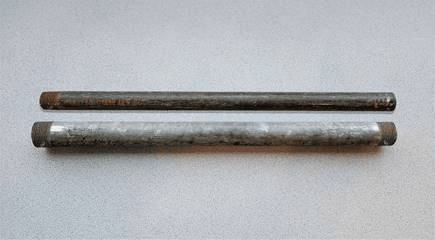 First, carefully scratch the exposed pipe (like you would a lottery ticket) with a key, coin, or a flathead screwdriver. Do not to make a hole in the pipe. If pipe is painted, use sandpaper to expose the metal first.
OR
Apply a magnet to the pipe if it is a metal pipe. Compare the results with the following descriptions:
- A plastic pipe can usually be visually differentiated from other metal pipes. It is smooth and can be white (PVC), black (HDPE), or blue (PEX) in color.
- Plastic pipes can be difficult to scratch, with little to no color change. A magnet will not stick to a plastic pipe.
- A copper pipe is the same color as a penny or sometimes orange. Older copper pipes may show green or blue tints.
- Upon scratching, the scratch will show a shiny penny color. A magnet will not stick to a copper pipe.
- A lead pipe is dull gray or silver and soft.
- The Scratch test will leave a noticeable shiny silver scratch on the surface. A magnet will not stick to a lead pipe.
- A galvanized steel pipe is black, dull gray, or silver.
- It will be difficult to scratch on the surface. A magnet will stick to a galvanized steel pipe.
Step Three - Take and Upload a Photo of Your Service Line
Complete the self-reporting survey on the next tab, and upload the photo when requested.
After your survey is submitted in tab 3, a City representative will contact you if further information is required.