Bond Debt
General Obligation (GO) Bonds
General Obligation (GO) bonds issued by a municipality are backed by the full faith and credit of the taxing district’s property tax authority.
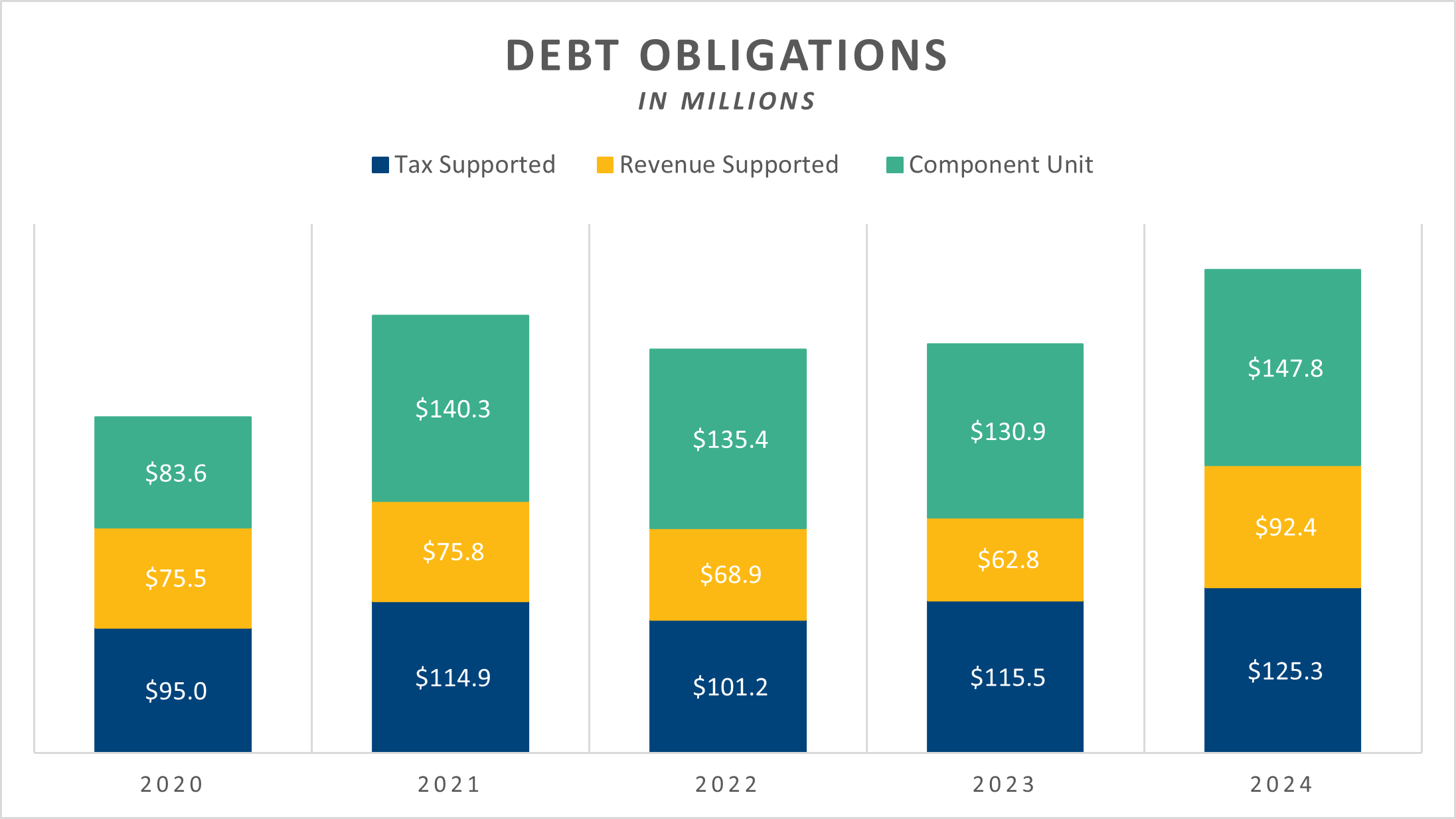
Tax-supported debt includes debt secured by a combination of ad valorem taxes and other revenue sources, even though the debt may be paid in whole or in part from non-tax revenue. Tax-supported debt generally must be voter approved (with the exception of Certificates of Obligation and a few other obligations). Learn more about the most recent bond election, 2025 City of Baytown Bond Election.
Tax-supported debt financing are often used for the acquisition of vehicles, road maintenance equipment, road construction, and maintenance materials; construction of road and bridge improvements; maintaining public safety (police, fire, and EMS); renovation, equipping, and construction of city buildings and utility systems; acquisition of real property; and the acquisition of computer equipment and software.
Refunding Bonds
Refunding bonds are bonds that are issue to replace or refinance outstanding general obligation or revenue bonds. The use of a refunding mechanism is often driven by the desire to lower interest rates and reduce payment amounts on older, more expensive debt.
Advance refunding refers to the practice of issuing refunding bonds more than 90 days before the date on which the refunded bonds may be called and redeemed.
Revenue Bonds
Revenue bonds are not backed by the full faith and credit of the municipality. Payment for debt service on revenue bonds are repaid from specific revenue sources rather than general tax revenues. Revenue bonds are issued for water and wastewater projects, airports, or storm water projects that generate their own income by establishing and collecting sufficient revenue (through rates) to retire the debt often referred to as self-supporting.
Certificates of Obligation (CO) Bonds
Certificates of Obligation (CO) bonds are similar to GO bonds but can be issued without voter approval, subject to public notice and potential petition requirements. They are often used for urgent or essential projects when timing does not allow for an election. COs are considered tax-supported debt.
Sales tax revenue is issued by certain municipalities or districts for purposes such as the acquisition of machinery and equipment, economic development, constructing and improving municipal parks and recreation facilities/entertainment centers as well as hike and bike trails.
Lease-Purchase Agreements
Under a lease-purchase agreement, the municipality leases equipment or facilities with an option to purchase at the end of the lease term. This allows governments to spread payments over time without issuing traditional bonds.
Public Improvement District (PID) and Tax Increment Reinvestment Zone (TIRZ) Bonds
Public Improvement District (PID) and Tax Increment Reinvestment Zone (TIRZ) Bonds These specialized bonds are tied to specific geographic areas. PIDs allow for assessments on properties that benefit from improvements, while TIRZ bonds are repaid through the incremental increase in property tax revenues within a designated zone.
 Debt Obligations